Japanese Samurai Culture Cabinetry

Samurai culture, known by scholars as the code of Bushido, was per force, minimalist. Self indulgence was not only discouraged, it could be several punished. Life for a Samurai, not unlike that for a European knight, was circumscribed by responsibilities , obligations, sacrifice and protocol beginning with the Edo period in 1603. The Shogun used his power to intentionally keep Samurai potential rivals outside the Tokugawa inner circle politically weak and materially poor. To this end, warrior clans were required to bear the expense of having dual residences in Edo and the home region. Alternating residences during each was mandatory with travel back and forth following a ritualized protocol for correct appearance thus required horses to be fitted, armor to be assembled, retainers to be costumed and formal clothes to be boxed for carrying. To be a Samurai was to wear two swords as a symbol of authority and thus to be feared, especially by the merchant class but quite often as well to be in debt to money lenders. Samurai cabinetry was practical and sparse in appearance. Not much of it has survived beyond museums and the private collections of a few notable families. From our collection, we have several examples of the containers used for the transport of clothing and armor, as well as the chests used by craftsmen in service to the Samurai class.

At Studio Japan, we have several examples of Samurai Tansu to offer from our collection, restored to our conservation standard.

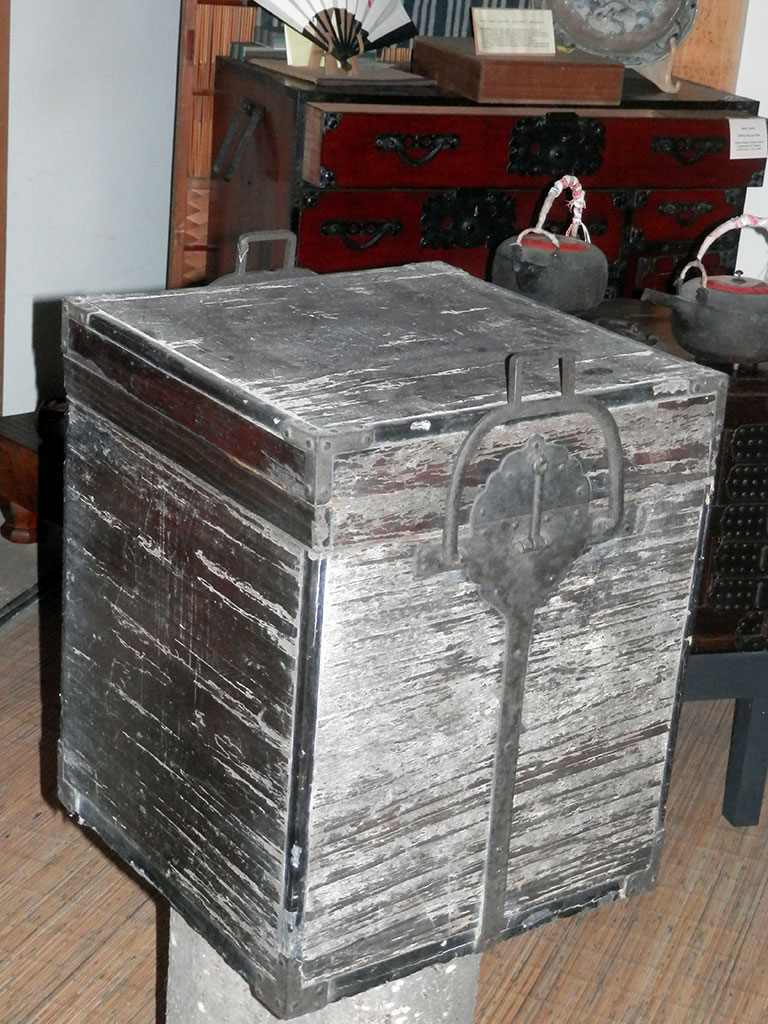
Kabuto Bako: A pole carried box for a helmet and related armor. Reference woodblock #18 on page 40 of Tansu: Traditional Japanese Cabinetry.
Era:
Edo period, circa 1720.
Restoration:
Restored to our conservation standard.
Material:
Paulownia wood with distressed lacquer finishing.
Dimensions:
15" x 15" x 18" (WxDxH)
Price:
$1600

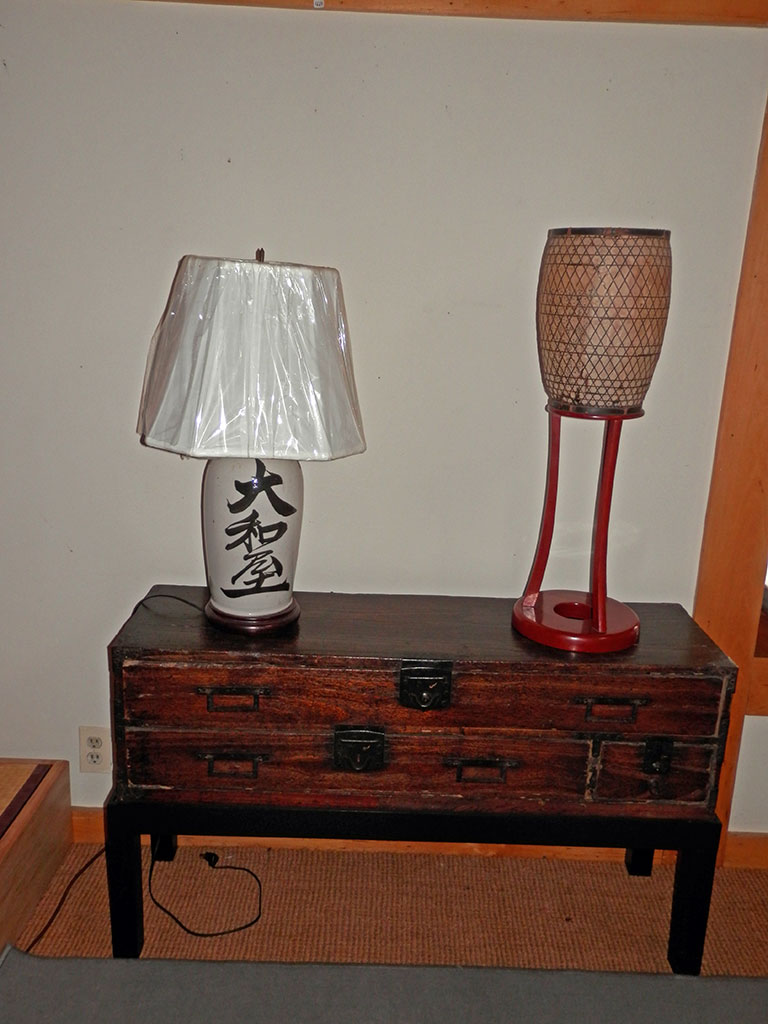
Katana Bako, sword blade polisher's chest: In the Edo period (1603-1868), the swords worn by Samurai, whether used or not, were expected to always be in perfect repair. Because the blades were of very high carbon content forged folded steel, the surface was easily blemished thus requiring professional polishing to keep them suitable for presentation or display. Our example includes a detachable new base.

Era:
Edo period, circa 1760.
Origin:
Kanto plain.
Restoration:
Restored to our conservation standard.
Material:
Paulownia wood.
Dimensions:
44" x 12" x 26" (WxDxH)
Price:
$2700

Contact Us

If you wish to know more about any of these piece or other items in our collection, please allow us to be of assistance.

To email Ty directly please click here

Leave Blank